Disability Living Allowance

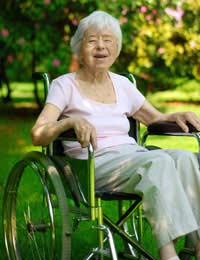
A Disability Living Allowance (DLA) is one of the main benefits available for disabled people. It is tax-free and not means-tested. It should not affect any other benefits received by the person you care for. DLA is made up of two parts: Care Component and Mobility Component.
Who can claim Disability Living Allowance?
If the person you are looking after is under 65 and needs help with personal care has severe mobility problems or needs supervision, they should be eligible for Disability Living Allowance. To qualify, they must have needed the help for 3 months before they can claim and expect to require the assistance for at least 6 months in total. It can be awarded for a set time or indefinitely.
Care Component – Lower, Middle and Higher Rates
The lower rate is £17.10 per week, the middle rate is £43.15 per week and the higher rate is £64.50. To qualify for the lower rate, the person you are caring for needs to be assessed as requiring help or not be able to prepare a meal during the day. To qualify for the middle rate, the person you are caring for needs to require frequent help or supervision during the day or during the night. To qualify for the higher rate, the person you are caring for needs to require frequent help during the day AND during the night.
Conditions for Receiving Disability Living Allowance Care Component
The Department for Works and Pensions state that to qualify for Disability Living Allowance at the lower rate, the person you care for should:
- Need help with their bodily functions from another person for a significant portion of the day or
- Be unable to prepare a cooked main meal for themselves.
- Need frequent attention throughout the day in connection with bodily functions or
- Need continual supervision throughout the day to avoid substantial danger to themselves or others.
- Need prolonged or repeated attention in connection with bodily functions or
- Need another person to be awake for a prolonged period or at frequent intervals for the purpose of supervision to avoid substantial danger to themselves or others.
- 'Significant portion of the day’ for the lower rate usually means about an hour of help a day; it can be made up of several short times throughout the day.
- ‘Frequent’ and ‘repeated’ means several times a day or night, not just first thing in the morning and last thing at night.
- ‘Attention’ usually means hands-on help as when you dress, feed or toilet your loved one.
- ‘Bodily functions’ include eating, drinking, hearing, seeing, going to the toilet, getting dressed and bathed. It can also mean walking or being helped with mobility as with pushing a wheelchair.
- ‘Supervision’ may be required for someone with dementia or other serious cognitive problems.
The lower rate is £17.10 per week and the higher rate is £45.00 per week. These rates and those mentioned above are applicable for the year to April 2008. The Government usually announces any planned increases in benefits during December each year. To qualify for the lower rate, the person you care for must require guidance or supervision from another person when walking outdoors in unfamiliar places. This could be due to a mental health problem or a physical disability. It is not based on the person’s ability to walk.
To qualify for the higher rate, the person you care for must either be unable to walk, have great difficult walking or face danger to their health from the physical exertion of walking. Some people automatically qualify for the higher rate; these include people without both feet (either due to an accident, amputation or from birth), people who are both deaf and blind, people who are severely mentally impaired and are eligible for the highest rate of the care component.
Getting Disability Living Allowance after the age of 65
If the person you care for was already claiming Disability Living Allowance when they reached 65, they can continue to do so after that age. But they cannot make a first claim once they have reached 65.
How is Disability Living Allowance claimed?
For an application pack, ring the free Benefits Enquiry Line (BEL) on 0800 882200 or textphone 0800 243355. The pack explains how the claim will be assessed. If you have a problem filling in the form, ask your local Citizen Advice Bureau for help.

Re: Could I be Exempt from Paying Car Tax?
I claim DLA i have my own car but my husband is the main driver can I still claim free car tax .
Re: Could I be Exempt from Paying Car Tax?
Hi there I receive adult disability and my mum is my driver and carer takes me to all my appointments and for…
Re: Could I be Exempt from Paying Car Tax?
My mum is 91 yrs old and has a blue badge. I am her main carer and I take her to her appointments and shopping. Am I…
Re: Could I be Exempt from Paying Car Tax?
I'm a full time carer for my step dad he doesn't drive but I do have my own car can i get free road tax and how do I…
Re: Could I be Exempt from Paying Car Tax?
My career as her own car can she drive it with out me in the car because I can’t go to do shopping so she dose it…
Re: Could I be Exempt from Paying Car Tax?
Hi I'm a carer for my 82 year old mother. She's recieves disability benefits because she's is blind in 1 eye and…
Re: Carer's Allowance
I on carer allowance and work on part time 5 h a week. I am 21 years old and ask8ng. I am must pay may doctor and prescription and…
Re: Health Benefits For Carer's
Can I get discount on carers allowance for glasses
Re: Health Benefits For Carer's
Hi I get 67 a week carer's allowance same as jsa. Am I allowed free eye test dental care and prescriptions. My husband is on state…
Re: Health Benefits For Carer's
Do you get help on council tax on carers allowance